Saturday, 23 September 2017

Muslim Cemetery rejects corpse of Civil servant struck dead by lightening in Ilorin

Muslim Cemetery rejects corpse of Civil servant struck dead by lightening in Ilorin 

Adekunle was on Thursday struck dead by lightening during a downpour. the Muslims in his neighbourhood refused to accept that his death was an act of God.
Cemetery rejects corpse of Civil servant struck dead by lightening
 The management of llorin Muslim Cemetery yesterday rejected the corpse of a 47-year-old civil servant who was killed by lightening in Oro, lrepodun Local Government Area, Kwara State.

Dr. Abubakar Aliagan, the Coordinator of the cemetery, said the rejection Mr. Salami Adekunle’s corpse followed an instruction that it should not undergo the normal Islamic prayers and bath. Aliagan said while the deceased was described as a practising Muslim in his life time, the Muslims in his neighbourhood refused to accept that his death was an act of God.
He said the performance of traditional rituals on Adekunle’s corpse after his death was unacceptable to the management of the cemetery, adding that the burial of the deceased in the cemetery must also be in line with Islamic tenets.
“If the late Salami will sleep in our Muslim cemetery, we have to do it in line with lslamic rites,” Aliagan said.
Adekunle was on Thursday struck dead by lightening during a downpour.
The deceased, who hailed from lnisa in Osun State, was until his death an official of the Registry Department at Kwara State College of Education, Oro.
The Public Relations Officer of the institution, Mr. Adesola Adewoye, said the family of the deceased would meet to decide on the next line of action.


He delayed our results for 6-yrs for not paying N50,000 bribe — Ex-student recount ordeal with sacked LASU lecturer

He delayed our results for 6-yrs for not paying N50,000 bribe — Ex-student recount ordeal with sacked LASU lecturer

Mr. Alabi Abiodun, an ex-student of LASU, revealed how the sacked lecturer allegedly delayed the processing of the result of seven students of the (2007) set for six years because they refused to pay the N50,000 bribes he allegedly demanded from each of them.
Ex-student recount ordeal with sacked LASU lecturer Like a season movie that is yet to climax, the last seems not to have been heard of the sacking of 15 lecturers, two non-academic staff and the demotion of two others by the Governing Council of the Lagos State University, as more facts have continued to emerge about the issue.
One of the sacked lecturers, Dr. Isaac Oyewunmi, who was the branch chairman of the Academic Staff Union of Universities in LASU, said recently that the allegations against him were mere victimisation and that it was “shameful” that LASU relied on “ghost petition” to sack him. He had said, “If you can even prove that I demanded some amount of money from those students, nothing more than that, and some people actually collected money, it is politics of activism and we are used to it. But it is actually shameful.
“When you have incidents of a ghost petition and then you use the evidence of a third party to rubbish the career of another – well, it’s interesting; we are enjoying it honestly.”
But, as it turns out, the person who wrote the petition against Oyewunmi has come out to state his side of the story. In an exclusive interview with our correspondent earlier in the week, the petitioner, Mr. Alabi Abiodun, an ex-student of LASU, revealed how the sacked lecturer allegedly delayed the processing of the result of seven students of the (2007) set for six years because they refused to pay the N50,000 bribes he allegedly demanded from each of them.
In the course of the delay, Alabi said he lost two job offers because his result was not ready and that it took the intervention of the former governor of the state, Babatunde Fashola, to get their results.
In a narrative that turned out to be very interesting, Alabi said he gained admission into LASU in 2003 to study Political Science under the sandwich programme. It was a three-year course, but due to strike actions along the line, he graduated in 2007, instead of 2006. He noted that his experience while the programme lasted was sweet and productive.


South-East governors denies warning FG over killing of IPOB members

South-East governors denies warning FG over killing of IPOB members

South-East governors have condemned the reports that claiming that they have sent warning to the Federal Government, urging it to “stop the killing IPOB members.

                     South-East governors denies warning FG over killing of IPOB membersThe South-East Governors’ Forum on Friday denied an online report that it had, at a meeting held in Abakailiki, the Ebonyi State capital, warned the Federal Government against killing members of the Indigenous People of Biafra.
In a statement on Friday signed by the Director-General of the forum, Prof. Simon Ortuanya, and the forum’s Director of Media and Communication, Michael Ike Udah, in Awka, Anambra State, the governors said such meeting did not take place, thus, such story was false. The forum condemned the report, saying it was intended to undermine the milestone already recorded on the issue.
The statement read in part, “The attention of the South-East Governors’ Forum has been drawn to false and unfounded news published online to the effect that the South- East Governors did send a strong warning to the Federal Government, urging it to “stop the killing IPOB members.
“In order to put the record straight, the South-East Governors’ Forum hereby states that there is no iota of truth in the said publication. The chairman of the forum and Governor of Ebonyi State, Chief Dave Umahi, is currently out of the country and was not even in Ebonyi State on the said Wednesday, September 6, 2017 when the alleged emergency meeting of South-East Governors purportedly took place.
“No South-East governor or their deputies attended any meeting, emergency or regular, in Abakaliki, on the said date.
“South-East Governors’ Forum reaffirms its belief in the amicable resolution of all issues especially as it relates to agitations by IPOB.”


BIAFRA: France denies funding IPOB, says we never heard the topic

BIAFRA: France denies funding IPOB, says we never heard the topic


We don’t have any knowledge of a particular presence of IPOB in France and the Nigerian authorities never got in touch with the Embassy on this point, says French embassy.
France, through the French embassy in Nigeria has denied warehousing funds belonging to the Indigenous People of Biafra and its leader, Nnamdi Kanu.

Political Counsellor, Claude Abily of the Embassy of France in a statement reacted to claims by Lai Mohammed, Nigeria’s minister of information, alleging that IPOB had stashed its funds in France through which it funds its activities.
“The Embassy of France was surprised by the statement made yesterday by the Minister of Information and Culture indicating that the “financial headquarters” of IPOB were in France”.“We don’t have any knowledge of a particular presence of IPOB in France and the Nigerian authorities never got in touch with the Embassy on this point. We stand ready to examine any information which could support this statement. Furthermore, we would like to reiterate that France actively cooperates with Nigeria in the field of security and that we strongly support the unity of the country” the statement said


Friday, 15 September 2017

Signs That You Could Have a Body Image Disorder

Signs That You Could Have a Body Image Disorder


Advertising and the media can heavily impact the way that we see ourselves and our bodies, because of the importance that is placed on physical attractiveness. This can lead to unhealthy behavior like eating disorders or body image disorders (such as body dysmorphic disorder (BDD) in an attempt to achieve the media standard of beauty.
It's important to understand what BDD is, in order to notice the signals. Body image refers to your perceptual body image, which is essentially the way you see yourself. There are bound to be various small things that each of us do not like about our bodies, however, people suffering from BDD obsess over these things (real or perceived) for hours each day.
These negative thoughts become uncontrollable, and, according to the Anxiety and Depression Association of America, the individual suffering from BDD does not believe others when they reassure them that they look fine. Body dysmorphic disorder can have the following effects.
Becoming withdrawn: Because people suffering from body dysmorphic disorder are obsessed with their perceived flaws this can lead to an avoidance of social situations.
Comparing your body to that of others: Not only do people with BDD think negative thoughts about their own appearance, but they also compare themselves to other people. And they will constantly need reassurance.
Seeking cosmetic surgery: Often, to correct their perceived flaws, people with BDD want to seek help from cosmetic surgery.
Developing obsessing behaviors: According to Mind, people with BDD can develop routines such as the excessive use of mirrors (or avoiding them entirely), picking at the skin, frequently weighing, comparing themselves to celebrities or models, and excessive grooming.
Feelings of shame: Among the many other symptoms, people with BDD can also develop feelings of shame, guilt, anxiety, and loneliness.
Who does it affect? BDD affects men and women almost equally but is more prevalent in teens and adolescents. In order to treat BDD, an individual must discuss their concerns with a doctor or mental health professional,


The Nutrition of Snake


The Nutrition of Snake


                                    Snake_000000478531_Small.jpg
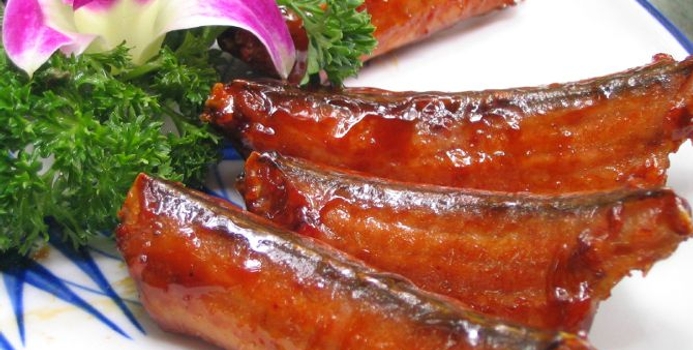
Snake meat is not common in Western meals, but is popular in other cultures for its supposed health benefits. Snake meat is also being more widely accepted as a healthy exotic game meat, and is often offered along side other exotic meats like alligator and ostrich in Western restaurants or over the Internet.
What is Snake Meat?
Snakes are reptiles that are found in most countries in the world. Some snakes are venomous, meaning that they can inject poison into the bloodstream through a bite. The most popular snake meat in the United States comes from rattlesnakes, although other types, such as python, are available over the Internet. Rattlesnake meat is commonly eaten in the Southwest, and popular recipes include rattlesnake chili and barbecued snake meat. Other cultures generally eat their own, locally found snakes.
Snakes are considered medicinal in Chinese lore, as a "warming" food, and the blood of snakes is often mixed with liquor to produce a virility enhancer. Traditional South American medicine includes dried or powdered snake meat which is believed to cure several different illnesses. Snake meat is usually said to taste like chicken, but a closer approximation is frog legs. Snake meat can be very tough if not prepared well.
Health Benefits of Snake
Snake meat contains protein like any other type of meat. Protein is necessary for many body systems, including the development of muscles. Protein provides amino acids the body cannot obtain any other way, which do everything from building cell walls, to regulating hormones. Snake meat contains roughly 93 calories per 100g (3.5 oz) of raw meat, depending on the type of snake. This is roughly half the calories and one third the amount of fat of a similar amount of sirloin beef steak. Fewer calories and less fat content for the same weight of meat can aid dieters in controlling their weight.
Cautions About Snake Meat
As snake meat is not often sold commercially in the United States, it does not have particular, rigid health standards that other meats do. Rattlesnake meat is often sold from "Rattlesnake Roundups," which are similar in atmosphere to rodeos and have been accused of low standards of food preparation. This is of particular concern as rattlesnake meat in South America has been linked several times with severe strains of salmonella, which grows in the snake's gut. This bacteria is neutralized by proper handling and by cooking. Snakes, like other animals, may also contain parasites and other infections that can be transmitted to humans, which can also be neutralized by proper handling, freezing, and thorough cooking. Snake venom must enter the blood stream to pose any danger to people, so there are no concerns about poisoning from eating most snakes.
Snake meat is relatively low in fat and calories, high in protein and some consider it a rising star in the food industry. However, like any type of meat, it should be prepared and cooked carefully to ensure it does not result in infection or food poisoning.

Met Police issues mugshots of London's most wanted suspects in time for Christmas

Met Police issues mugshots of London's most wanted suspects in time for Christmas Police are hoping to catch a number of suspects...