Saturday, 7 May 2016

Boko Haram kills 38 in attacks on villages in Niger

IMG_20150618_094959
Chadian troops operating in northeastern Nigeria.
Boko Haram, which now refers to itself as Wilayat Gharb Ifriqiyah (Province of West Africa) after pledging allegiance to the Islamic State, has assaulted two villages in Niger and targeted civilians. The attacks in the villages of Lamina and Ungumawo in the Diffa region have left at least 38 people dead.
Many of the victims that were killed during the overnight attacks were women and children, according to the BBC. The news service quoted a Nigerien official who said that along with killing civilians, “the militants had burnt down several houses.” Boko Haram has yet to comment on the attack.
The Diffa region of Niger, which sits in the southeast of the country, borders Nigeria’s volatile Borno state. Boko Haram attacked this region back in February when it assaulted the town of Bosso. The militants were able to enter the town, however, Nigerien military officials said that its forces drove the attackers back, “killing 109.” That assault occurred just days after Boko Haram attacked the town of Fotokol in Cameroon, killing 70.
Additionally, Boko Haram is being blamed for an attack in Chad on Monday. The suicide assault in the Chadian capital left 23 dead and more than 100 wounded, also according to the BBC. Reports say that the suicide attackers were on motorcycles and detonated in front of Chadian police stations. In response to the attacks, Chad has launched airstrikes against Boko Haram in Chad and has banned face veils worn by Muslim women in the country. While Boko Haram is suspected by many to be the perpetrator, neither it nor any other jihadist group has claimed credit for the attack.
Boko Haram has struck in Chad before. Back in February, the jihadist group attacked a village, killing the local police chief and wounding four other people. Many residents also reported that the jihadists burned down two-thirds of the village. That attack was seen as a response to Chad’s involvement with Nigeria, Cameroon, and Niger in combating Boko Haram in northeastern Nigeria. Chadian troops also play an important role alongside Nigerian forces on the ground against the jihadist group.
Attacks in Nigeria
While Boko Haram is suspected of attacking in both Niger and Chad, the jihadist group has mounted several attacks inside Nigeria in recent days. On Monday, several gunmen killed seven people after detonating several improvised explosive devices in a village in Borno state. In nearby Yobe state, Boko Haram suicide bombers killed 11 in the town of Potiskum on June 15.
A day earlier, the jihadists attacked the town of Babangida, also in Yobe state. That attack left several buildings and structures razed, including the local police station and a communication tower. No one was killed in the attack and Nigerian troops are said to have forced the jihadists to leave.
On June 12, Boko Haram razed six villages and killed 37 people near the Sambisa Forest in Borno state. The attack is said to have been in response to the Nigerian military’s claim of clearing the forest, a well-known stronghold of Boko Haram. A day earlier, three villages were razed and 43 people were killed in an attack also near the Sambisa Forest.
On June 9, 15 people were killed and an entire village was razed in an attack in Borno state. A local resident was quoted as saying that “the whole village was burnt by Boko Haram gunmen. We lost around 500 homes.”
While a regional force has been deployed to help Nigeria combat Boko Haram, the jihadist group retains the ability to both operate and coordinate attacks in northeastern Nigeria. The Nigerian military, alongside regional forces from Chad, Niger, and Cameroon, has been able to recapture several towns and villages that were held by Boko Haram; however, the jihadist group still maintains control over a large portion of its territory in Borno, Yobe, and Adamawa states. [See LWJ report, Boko Haram rolls with the punches, remains a threat.]
Boko Haram officially pledged allegiance to the Islamic State and its leader, Abu Bakr al Baghdadi, back in March. The jihadist group started referring to itself as an official “province” of the Islamic State in April.

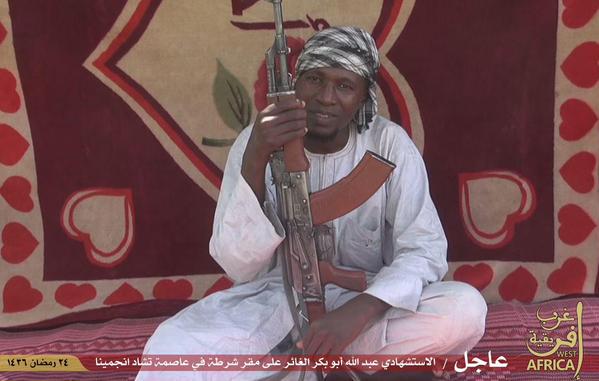
Photos of the suicide bombers that struck in Chad and Nigeria: Abdullah Abu Bakr:


Photos of the suicide bombers that struck in Chad and Nigeria:
Abdullah Abu Bakr:

A male suicide bomber dressed as a woman in a burka struck yesterday in the Chadian capital of N’Djamena. The attack killed 14 people and wounded over 70 others. The blame was immediately placed on Boko Haram, which is now known as “Wilayat Gharb Ifriqiyah” (West African Province), or Islamic State West Africa (ISWA).
The bomber attempted to enter a market within the city but detonated when confronted by military police, the Associated Press reported.
The Islamic State, through its “Wilayat Ghrab Ifriqiyah,” has officially claimed the attack in a statement released online. The statement, which has been translated by the SITE Intelligence Group, said that “[a] knight from the knights of the Caliphate, the martyrdom-seeking brother Abdullah Abu Bakr, launched to strike the police headquarters in the Chadian capital, N’Djamena.” In the same message, the Islamic State also claimed a suicide attack in the Nigerian city of Maiduguri.
This is not the first time that ISWA has struck in N’Djamena. Last month, the group launched a double suicide bombing against police headquarters. Those bombings left 26 people dead and more than 100 others wounded. In a statement released by the Islamic State, the bombers were identified as Abu Hamza al Ansari and Abu Saadiq al Ansari. In response to this attack, Chad launched airstrikes against ISWA positions within Nigeria and banned women from wearing face veils in the country. [See LWJ report, Islamic State in West Africa claims Chad suicide attacks.]
The ISWA has struck in other places in Chad before. Back in February, the jihadist group targeted a village, killing the local police chief and wounding four people. Many residents also reported that the jihadists burned down two-thirds of the village. That assault was seen as a response to Chad’s involvement with Nigeria, Cameroon, and Niger in combating the ISWA in northeastern Nigeria. Chadian troops play an integral role in the coalition.
Last week, ISWA targeted two villages in the Lake Chad region, slitting the throats of 26 civilians. In Merom village, 13 people were killed and several houses were burnt down. Another 13 were killed in a nearby village before the jihadists were turned back by local forces. On the same day, ISWA also attacked a village in Cameroon, which left at least 13 dead.
The Lake Chad region has been a volatile area for Nigeria, Niger, and Chad. In areas near Lake Chad in the Diffa region of Niger, ISWA killed over 30 in assaults on two villages last month. This region was also targeted back in February when IWSA assaulted the town of Bosso. Although the jihadists were able to enter the town, Nigerien military officials said that their forces drove the attackers back, “killing 109.”
It is also thought that more than 200 people, mainly civilians, were killed in attacks in Nigeria by the ISWA last week. A double suicide bombing in the city of Jos killed at least 48 people, while an attack on mosques in northeastern Nigeria killed at least 97 people, many of them children, as they were praying. Earlier this week, 25 people were killed in the central Nigerian city of Zaria after suicide bombers targeted a governmental building. Additionally, a girl thought to be just 12 years old was used as a suicide bomber in Wagir in Yobe state, killing 10 people and wounded dozens more in an attack on a city market.
While a regional force has been deployed to help Nigeria combat the ISWA, the jihadist group retains the ability to both operate and coordinate attacks in northeastern Nigeria. The Nigerian military, alongside regional forces from Chad, Niger, and Cameroon, has been able to recapture several towns and villages that were held by the ISWA, but the group maintains the ability to operate, and controls rural areas in Borno, Yobe, and Adamawa states. [See LWJ report, Boko Haram rolls with the punches, remains a threat.]
Boko Haram officially pledged allegiance to the Islamic State and its leader, Abu Bakr al Baghdadi, back in March. The jihadist group started referring to itself as an official “province” of the Islamic State in April.
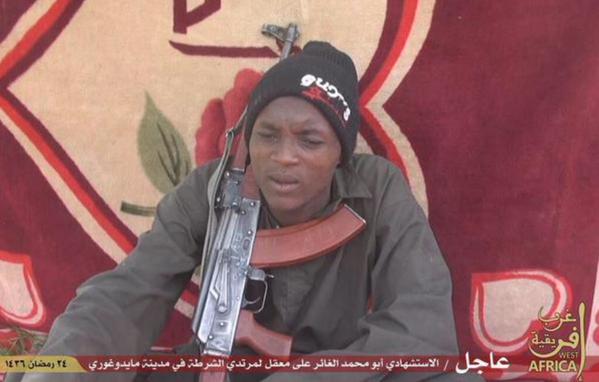
Photos of the suicide bombers that struck in Chad and Nigeria:
Abdullah Abu Bakr:
CJqyVSnWgAAkuqy
Abu Mohammad:
CJqyV6RW8AAO5pa

5 female suicide bombers strike in Nigeria

5 female suicide bombers strike in Nigeria

5860362-3x2-940x627
Islamic State West Africa (formerly Boko Haram) leader Abubakar Shekau 
Five girls have reportedly detonated themselves in the northeastern city of Maiduguri today, killing at least nine people and wounding more than 30 others. Using female suicide bombers is a common tactic of the Islamic State’s West African Province (ISWA), formerly known as Boko Haram.
According to the BBC, the five bombers targeted a mosque and the house of a local vigilante leader in the city. The British news agency quoted local witnesses and officials as saying that some of the girls “were as young as nine.” Additionally, the death toll is expected to rise as Nigerian officials gather more information from the scene. Last week, the city was hit by coordinated improvised explosive device attacks which left at least eight people dead.
Maiduguri has seen several attacks by female suicide bombers this year. On June 24, a pair of women who were thought to be in their twenties killed 30 people in separate attacks at a market and a prayer area in the city. Three days earlier, another woman detonated a device at a bus station in Maiduguri, killing at least 20 people.
The suicide bombings in Maiduguri also come a week after two female suicide bombers detonated themselves in Mora in northern Cameroon. According to Reuters, a police officer and two civilians were killed in that attack. Earlier last month, the jihadist group used two teenage girls to attack a local market and an army camp in Kerewa, killing 30.
The ISWA’s deployment of women as suicide bombers has been a common tactic in Nigeria over the past two years. In one of the deadliest attacks, on Nov. 27, 2014, two women killed 78 people and wounded scores more at a market in Maiduguri. The group’s first known instance of using a female suicide bomber was on June 8, 2014, when a middle-aged woman on a motorcycle detonated near a Nigerian military barracks in Gombe, killing one policeman.
The ISWA has deployed at least 52 female suicide bombers in Nigeria and Cameroon since June 2014, according to data compiled by The Long War Journal. The use of women can make it easier for jihadist groups to conduct suicide attacks, as explosives may be easier to hide, and men are less likely to search women due to cultural sensitivities. The ages of the bombers have ranged from just nine years old to middle-aged.
Despite a coordinated military offensive by Nigeria, Chad, and Cameroon that has targeted ISWA strongholds in Nigeria and the Lake Chad region, the jihadist group has maintained its attack tempo. ISWA has launched two suicide attacks in N’Djamena, the capital of Chad, over the past months, and has conducted multiple military assaults in Niger, Cameroon, and Nigeria. In one particularly gruesome attack, ISWA gunmen assaulted two mosques in the town of Kukawa in Borno as worshippers were praying. At least 97 people, many of them children, are reported to have been killed. Around 800 people are suspected to have been killed since Nigerian President Muhammad Buhari came into power in May.
List of Islamic State West Africa/Boko Haram suicide attacks utilizing women since the beginning of June 2014:
Oct 2, 2015 – Five female suicide bombers kill 9 in coordinated attacks on a mosque and a vilgilante leader in Maiduguri.
Sept 20, 2015A police officer and two civilians were killed when two female suicide bombers detonated themselves in Mora, Cameroon.
Sept 3, 2015 – Two female suicide bombers killed 30 and wounded over 100 in an attack on a local market in Kerawa, Cameroon, and close to a nearby army camp.
Aug 25, 2015A 14 year old girl suicide bomber killed 5 in an attack on a bus station in Damaturu.
July 25, 2015 – A 40 year old woman, described as “mentally unstable,” detonated herself in a crowded market in Damaturu, Nigeria, killing 14.
July 25, 2015 – A 12 year old girl killed 20 people in a suicide bombing on a popular bar in Cameroon.
July 22, 2015 – Two girls killed at least 20 people in separate suicide bombings in Maroua, the capital of Cameroon’s Far Northern Region.
July 17, 2015 – A 10 year old girl and an elderly woman killed 50 people in separate suicide attacks in Damaturu, Nigeria.
July 16, 2015 – A young woman suicide bomber killed at least nine people as they gathered to mark the Muslim holiday Eid al-Fitr in Damaturu.
July 12, 2015 – Two women suicide bombers killed 10 civilians and a Chadian soldier in an attack in the Cameroon border town of Fotokol.
July 7, 2015 – A woman killed at least 20 people after detonating her vest in a crowd of Nigerian government workers in Zaria.
July 7, 2015 – A female suicide bomber detonated her explosives after she was stopped at a roadblock in Zaria.
July 5, 2015 – A woman suicide bomber killed five people at a Christian church in Potiskum, Nigeria.
July 3, 2015 – A teenage woman suicide bomber killed 12 worshippers when she blew herself up in a mosque in Malari in northeastern Nigeria.
July 3, 2015 – The Nigerian military said that six women suicide bombers killed scores of civilians and one soldiers in separate attacks in the village of Zabamari Muna near Maiduguri.
June 24, 2015 – A girl, who is thought to have been 12-years-old, killed 10 people after detonating her explosive vest at a market in Yobe state, Nigeria.
June 23, 2015 – A teenage girl killed 20 people at a bus station in Maiduguri after detonating herself.
May 16, 2015 – A woman killed 10 people in a suicide attack in Damaturu, Nigeria.
March 12, 2015 – A woman killed at least 34 people after detonating an explosive device at a market in Maiduguri.
Feb 22, 2015 – A young girl killed five people and wounded dozens more in a bombing at a security checkpoint outside a market in Potiskum.
Feb 15, 2015 – A woman killed at least seven people in a bombing at a crowded bus station in Damaturu.
Feb 12, 2015 – A woman killed seven people in a suicide attack at a crowded market in Nigeria’s Borno state.
Jan 10, 2015 – A female suicide bomber killed 19 in an attack in Borno.
Dec 10, 2014 – Two female suicide bombers kill four in Kano.
Dec 1, 2014 – Two women suicide bombers kill five in Maiduguri.
Nov 26, 2014 – Two women suicide bombers killed 45 people at a crowded market in Maiduguri.
Nov 16, 2014 – A woman suicide bomber killed at least 12 in an attack at a cellphone market in Azare, Nigeria.
Nov 12, 2014 – A woman suicide bomber detonated her vest at a teacher training college in Kontagora in Nigeria’s central Niger State.
July 31, 2014 – A woman killed three people after detonating her explosives at a college in Kano, Nigeria.
July 30, 2014 – A teenage girl killed six people after blowing herself up among a crowd of students at a college campus in Kano.
July 28, 2014 – A young woman killed three people after detonating her bomb at a kerosene queue in Kano.
July 28, 2014 – A teenage girl injured six people after detonating a bomb at a shopping centre in Kano.
July 27, 2014 – A teenager with an explosive device concealed under her veil detonated her bomb up at a university campus in Kano, injuring five police officers.
June 25, 2014 – A woman detonated her bomb after parking her car next to a gasoline tanker at a fuel depot in Lagos, Nigeria.
June 8, 2014 – A middle-aged woman killed a policeman in a suicide attack at a military barracks in Gombe, Nigeria.

Islamic State West Africa targets Nigerian army in new video

Islamic State West Africa targets Nigerian army in new video

18
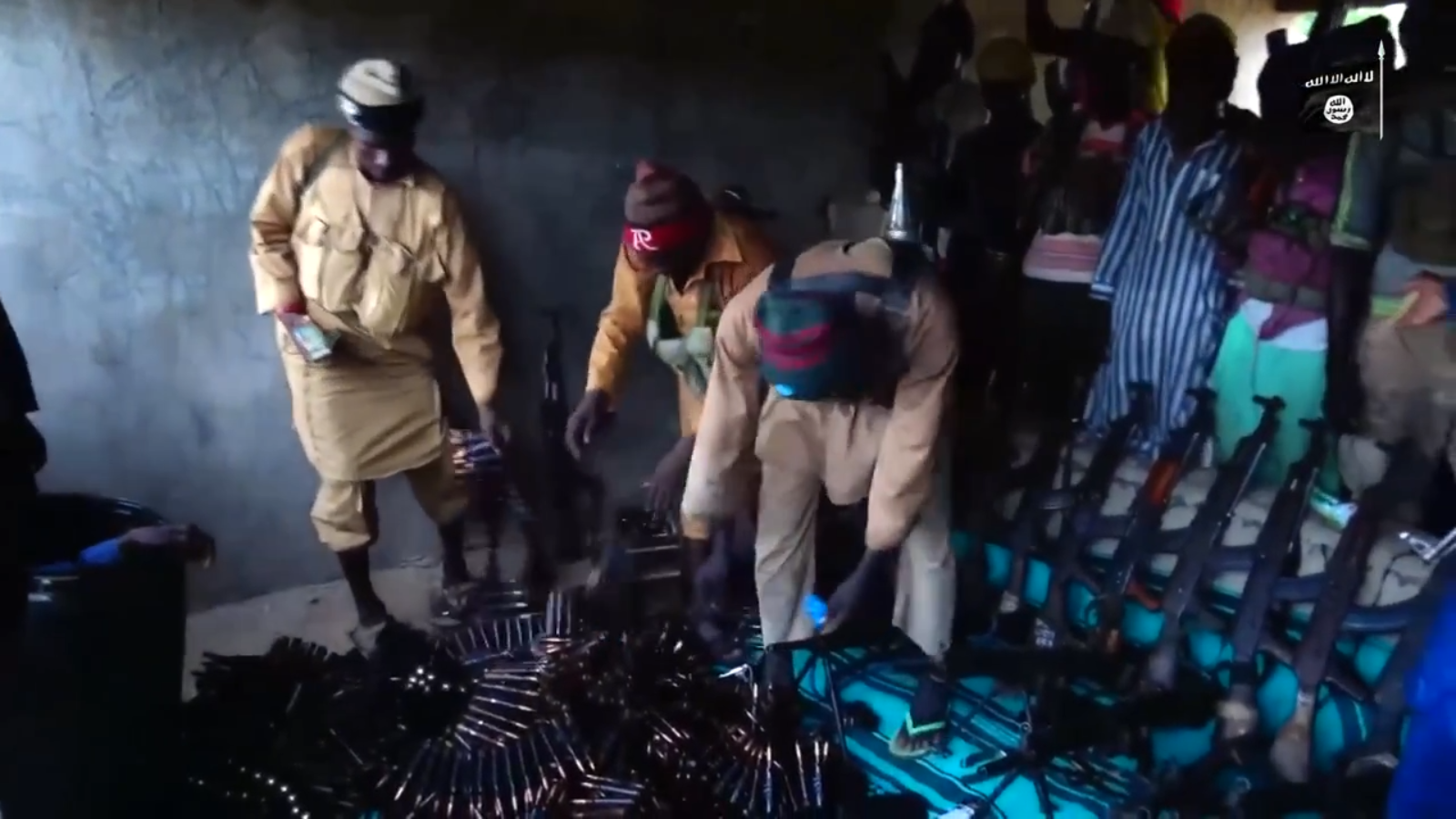
Islamic State West Africa fighter showing off captured weapons in northeastern Nigeria
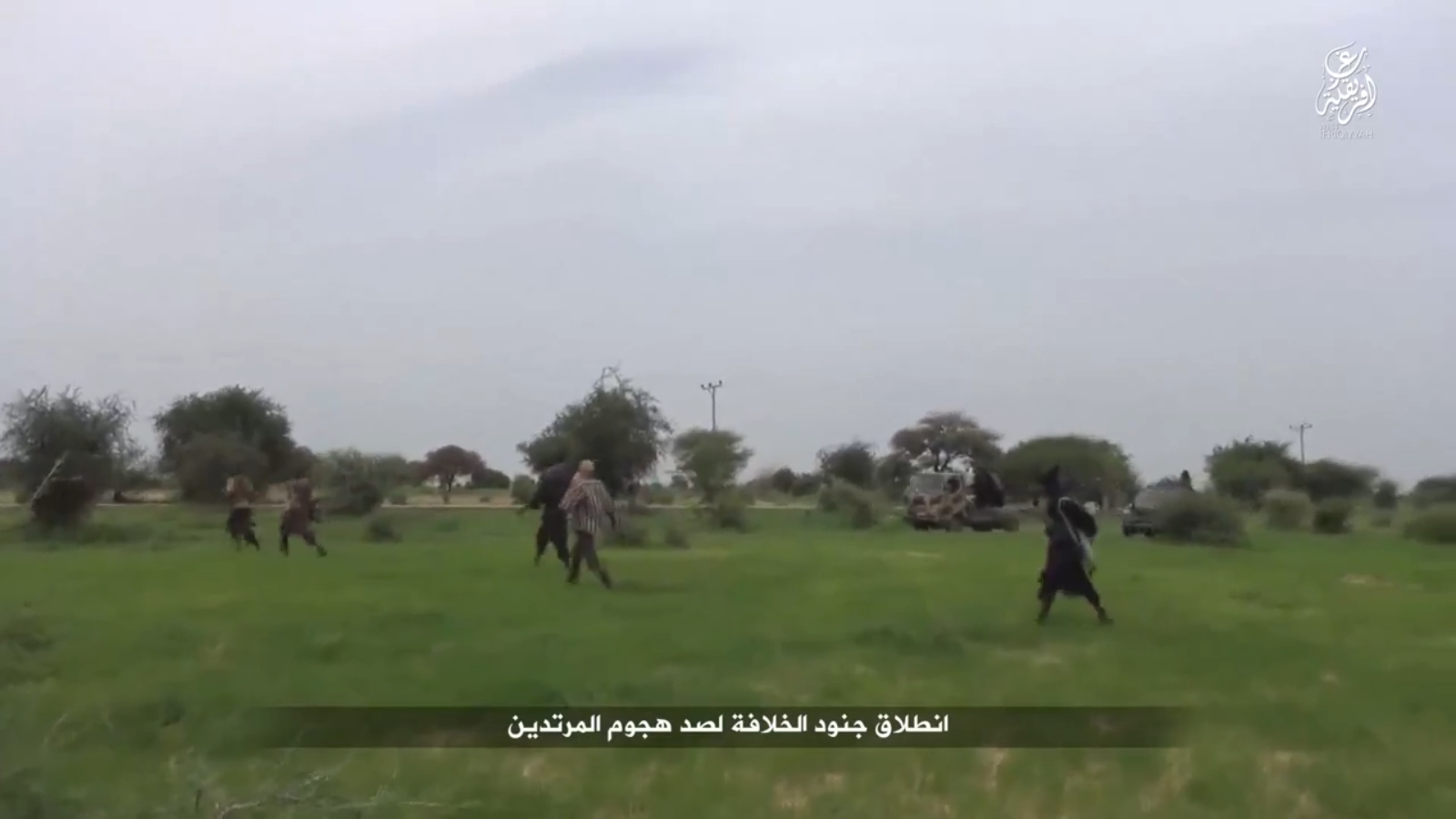
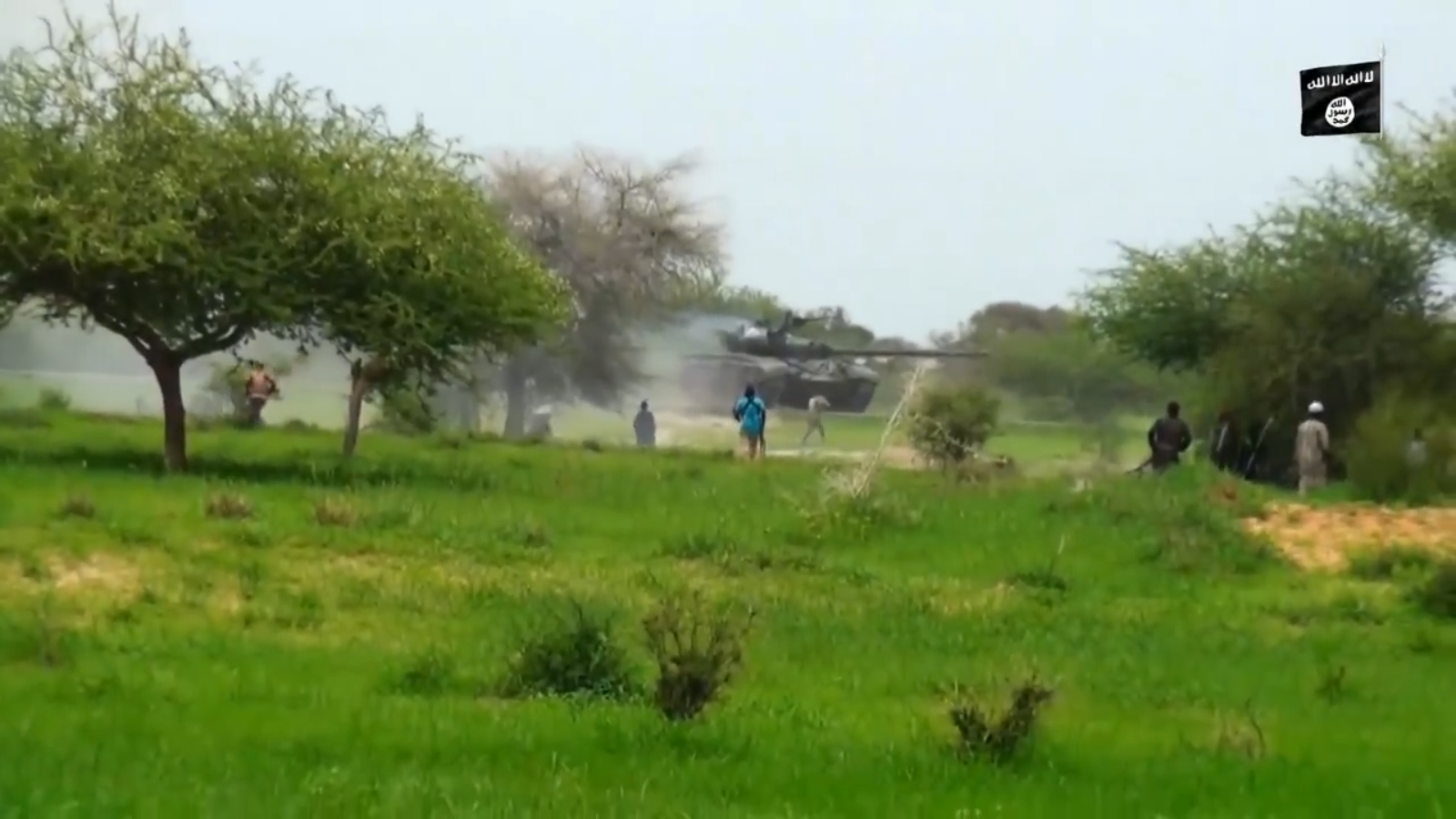
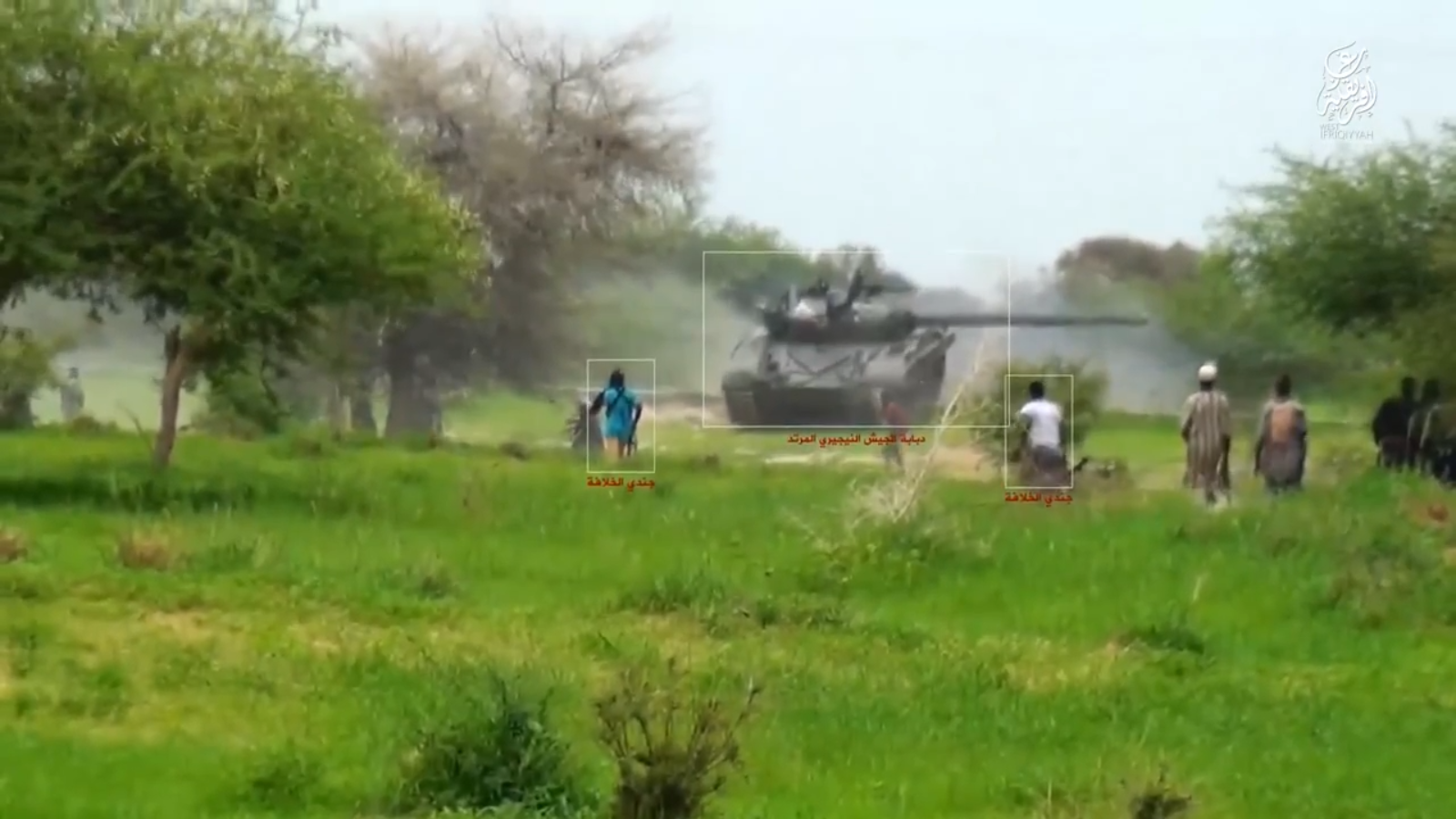
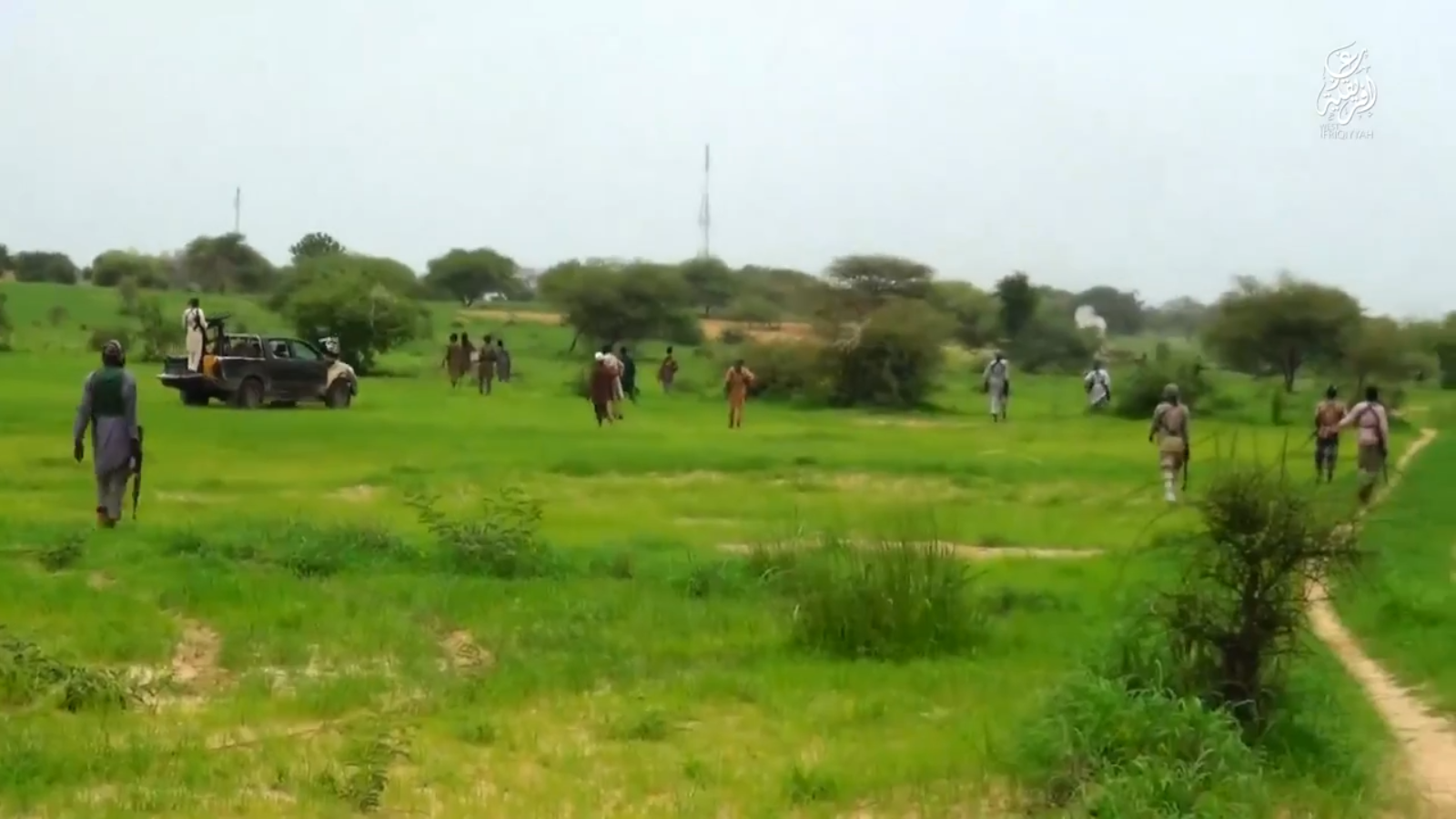
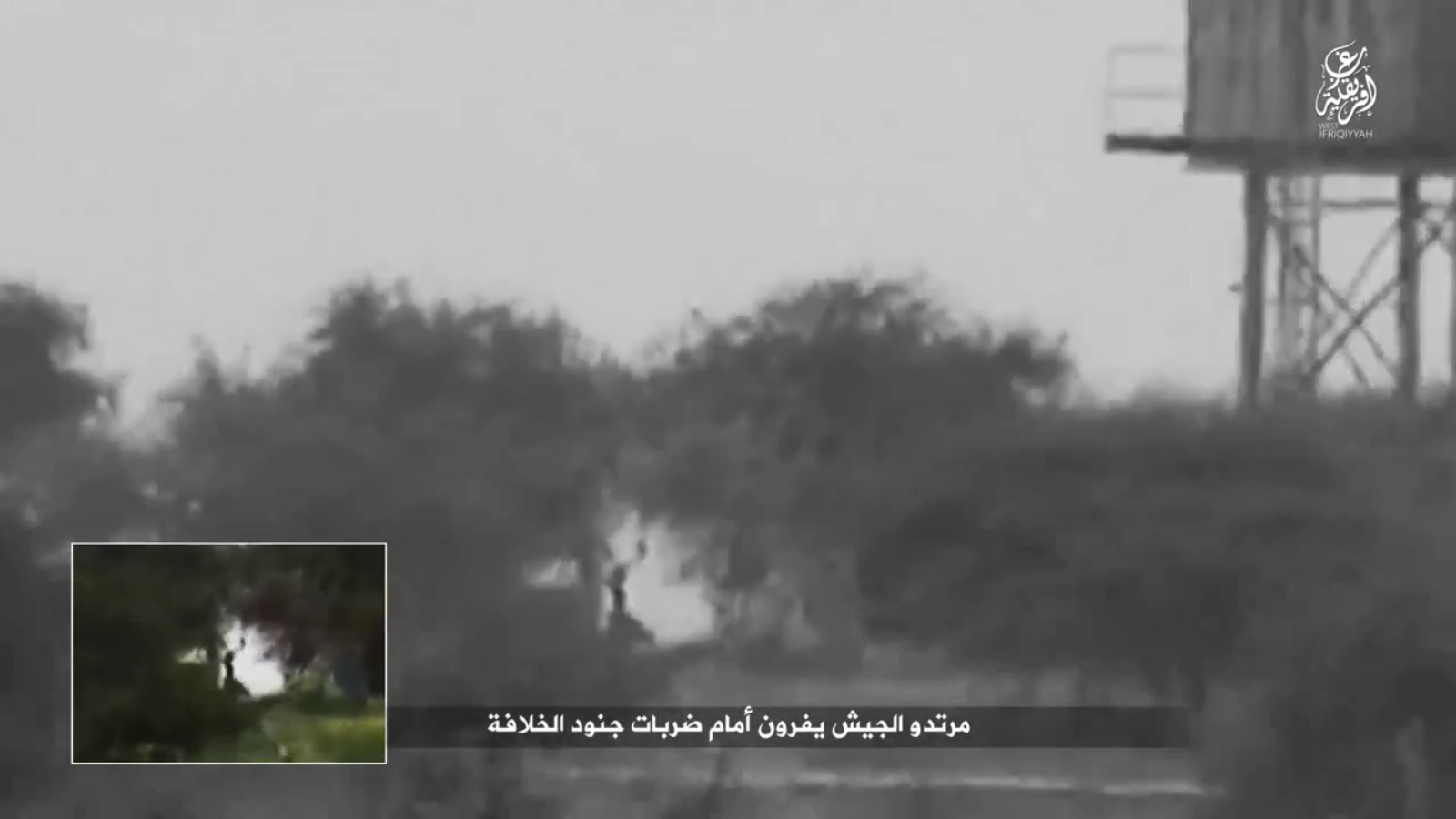
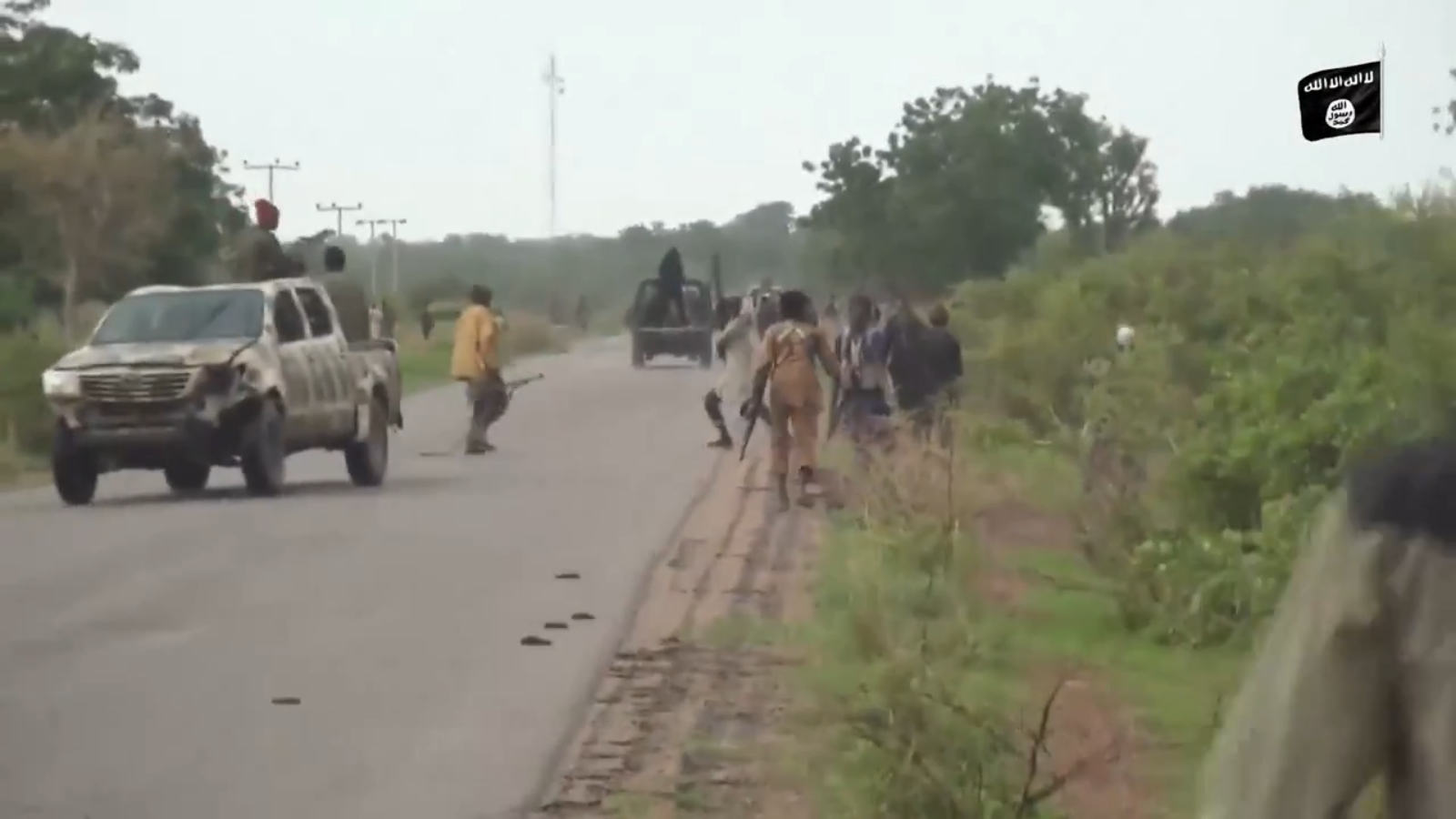
The Islamic State’s West Africa Province (ISWA–formerly known as Boko Haram) has released a short video showing its forces overrunning a Nigerian army position in the northeastern Nigerian province of Borno. The date of the incident is unknown, but attacks in Borno happen frequently.
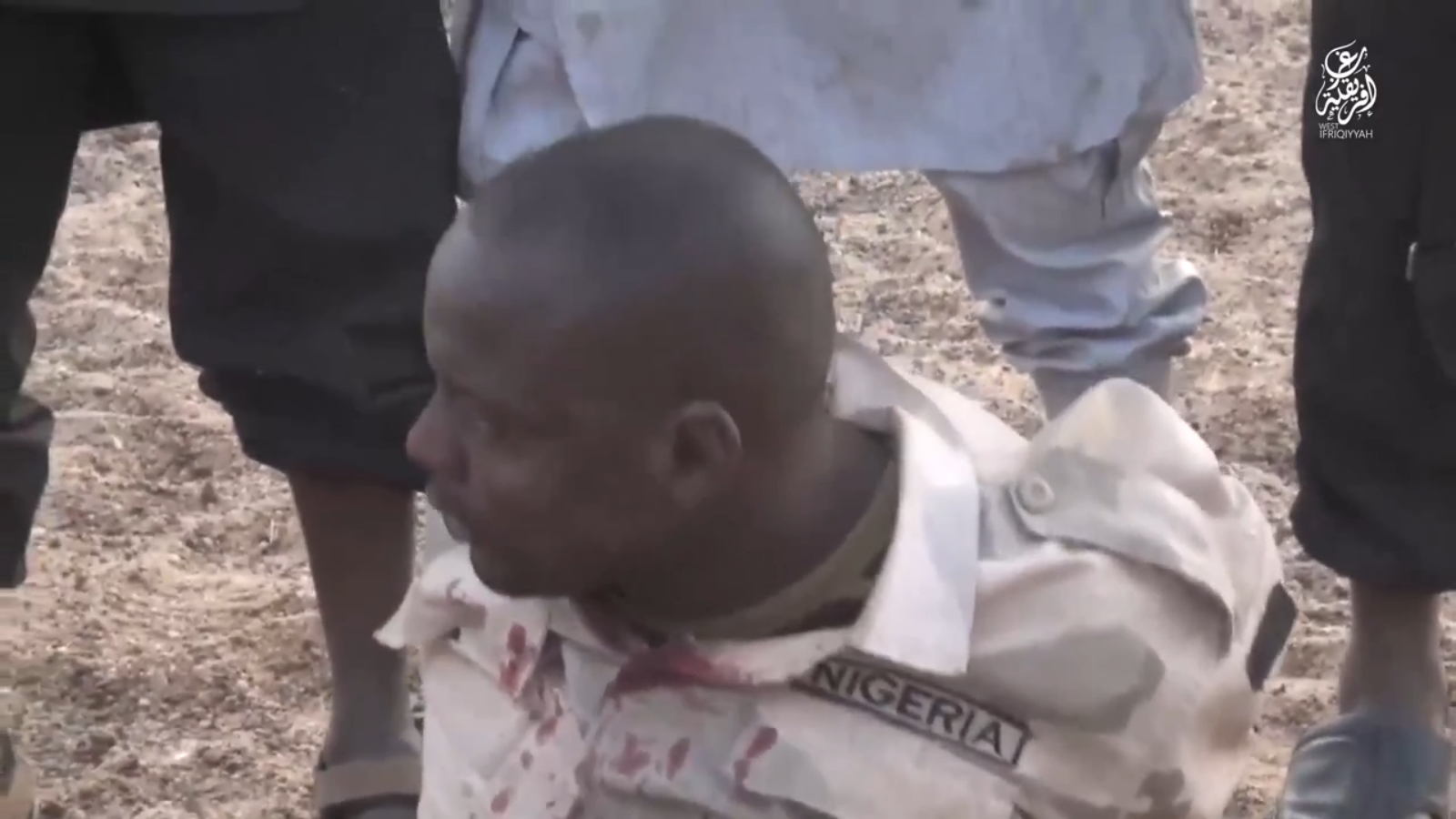
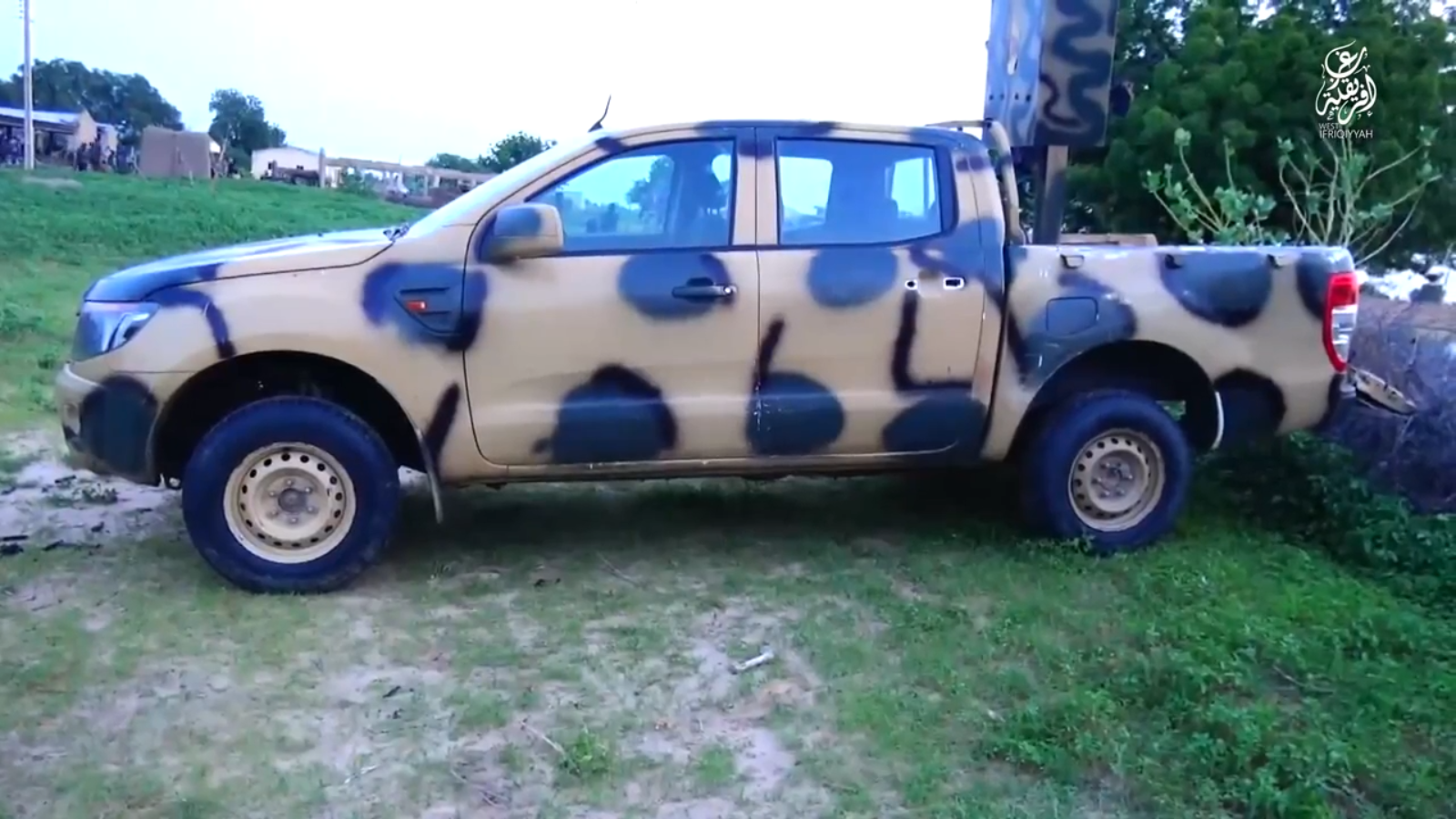
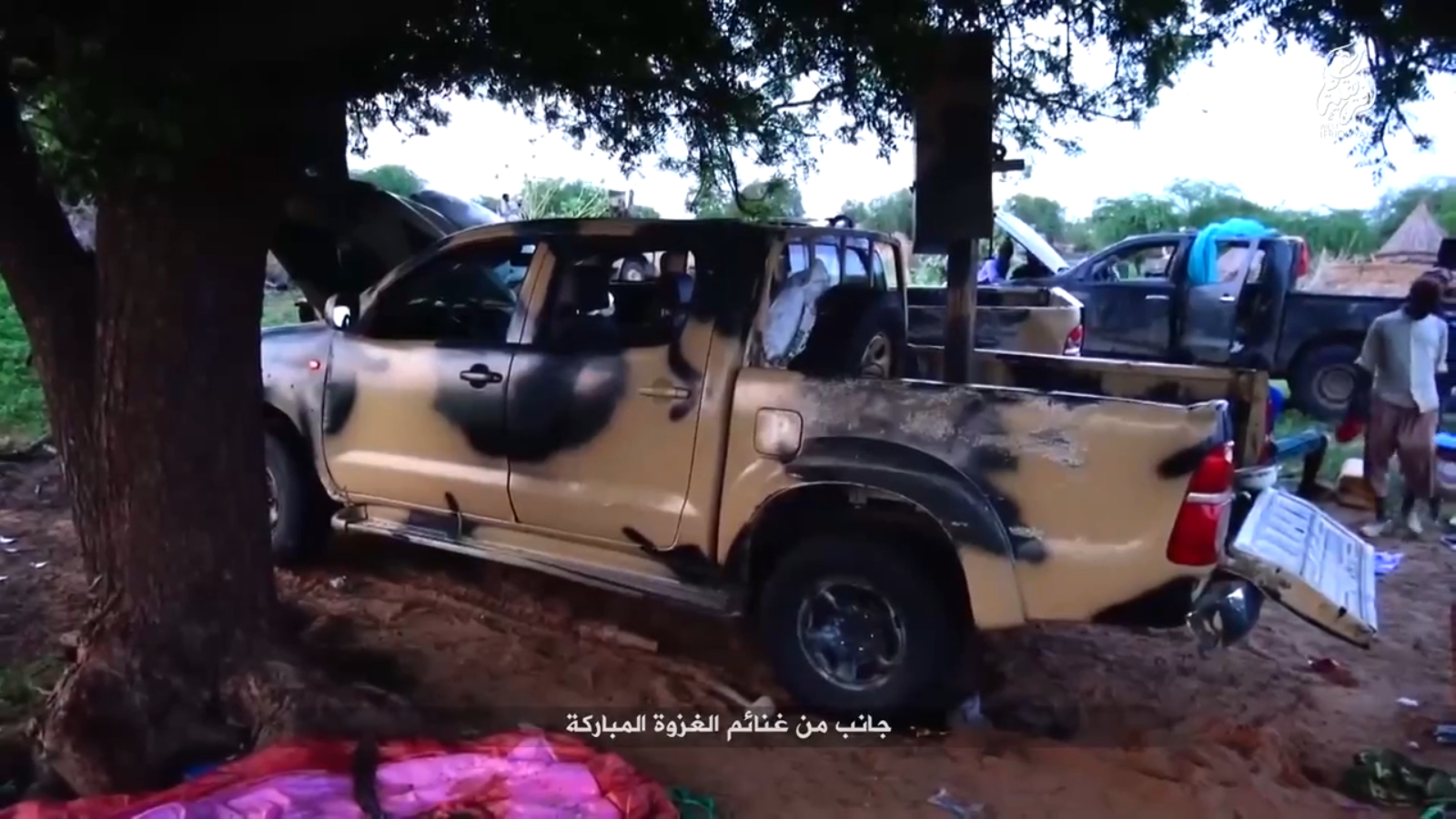
The video shows ISWA fighters advancing on the position through an open field on foot and in several technicals (heavily armed pickup trucks). The fighters are then shown targeting the Nigerian forces, including a tank. After a heavy gunfight, Nigerian personnel and the tank are seen retreating from their positions. The last half of the video shows several dead Nigerian soldiers, while one soldier is seen being captured and subsequently beheaded. In the last scenes, the jihadists show off weapons and vehicles taken as “spoils.”
Many of the scenes in the video are too graphic to be published at The Long War Journal.
While the Nigerian military has driven ISWA out of many of its strongholds in Yobe, Adamawa, and Borno states in northeastern Nigeria, the jihadist group continues to pose a significant threat to the Nigerian military and the civilians in the area. Suicide bombings and attacks like the one shown in the video are still an almost daily occurrence in the the West African country. Additionally, the jihadist group has been able to conduct operations in neighboring Cameroon, Niger, and Chad.
Just yesterday, over 30 people were killed in suicide attacks in the Lake Chad region of Chad. According to the Associated Press, at least 36 people were killed in two separate but coordinated suicide attacks conducted by five bombers. The first bombing took place in a market in the town of Baga Sola, while another occurred in a nearby refugee camp. The bombing in the market killed 16, while the attack in the refugee camp killed at least 20. The Associated Press has reported that two of the five bombers were women, however, Voice of America has quoted Chadian authorities as saying that all five were females.
ISWA has used at least 54 women as suicide bombers since June 2014 according to data compiled by The Long War Journal. The ages of the women vary from just 10 years old to middle-aged. It is likely many of the girls and women used by the jihadist group were kidnapped before being indoctrinated into conducting such attacks. The use of women can make it easier for jihadist groups to conduct suicide operations, as explosives may be easier to hide, and men are less likely to search women due to cultural sensitivities.
Despite a coordinated military offensive by Nigeria, Chad, and Cameroon that has targeted ISWA strongholds in Nigeria and the Lake Chad region, the jihadist group has maintained its attack tempo. ISWA has launched two suicide attacks in N’Djamena, the capital of Chad, over the past months, and it has conducted multiple military assaults in Niger, Cameroon, and Nigeria. ISWA also claimed credit for a coordinated suicide attack in the Nigerian capital of Abuja just last week. In addition, the group targeted Chadian troops near Lake Chad last week; 11 soldiers and 17 jihadists were killed in the battle.
Photos from the ISWA video:
1
2
3
4
5
6
7
8
9
10
11
12
13
14
16
17
Caleb Weiss is an intern at the Foundation for Defense of Democracies and a contributor to The Long War Journal.

Osama Bin Laden’s Files: Boko Haram’s leader wanted to be ‘under one banner’

Osama Bin Laden’s Files: Boko Haram’s leader wanted to be ‘under one banner’

Screen Shot 2015-02-23 at 11.41.58 AM
Abubakar Shekau, the leader of Boko Haram, which became the Islamic State’s “province” in West Africa.
Abubakar Shekau, the leader of Boko Haram, requested to speak with Osama bin Laden’s deputy, according to a newly released letter recovered during the May 2011 raid in Abbottabad, Pakistan.
After citing Islamic texts concerning the benefits of unity and the pitfalls of factionalism, Shekau said he and his men had “listened to…the tapes of al Qaeda and its sheikhs,” including bin Laden, Ayman al Zawahiri, Abu Musab al Zarqawi, Abu Yahya al Libi and Abu Qatadah al Filistini. Zarqawi, who founded al Qaeda in Iraq and was killed in June 2006, was already dead when Shekau wrote his letter, as he asked Allah to “have mercy on [Zarqawi’s] soul.” Abu Yahya al Libi served as al Qaeda’s general manager until his demise in a US drone strike in June 2012.
“But now what we have left is to learn about the system of the organization and how it is organized,” Shekau continued. “The traveler will fail if he does not become familiar with the road that he is taking, and when he fails he may return or choose other options. But, when the traveler knows his way, he never fails, because he knew what he was facing.”
Shekau asked Allah to “bear witness” that “we want to be under one banner and there must be a vision to begin with, because our religion is a religion of vision and knowledge.”
“With your permission,” he concluded his letter, “I ask to speak with Osama bin Laden’s deputy, may Allah protect him, because the group is loyal, which Allah will ask me about on the Day of Judgment.”
Shekau was likely referring to how al Qaeda “is organized” and the requirements to become part of the organization. Ayman al Zawahiri was bin Laden’s deputy when Shekau’s request was written.
Neither the original Arabic, nor the English translation posted online by the Office of the Director of National Intelligence (ODNI) is dated. According to the US government’s translation, Shekau wrote that he and his men “pledge[d] allegiance to our Imam Abu Yusuf Muhammad Bin Yusuf” and this “union” has “continued with us even to this day.” Yusuf, who led Boko Haram, was killed in July 2009.
In 2012, both the Washington Post and the Guardian (UK) reported that bin Laden’s files included correspondence with Boko Haram. But it wasn’t until earlier this week that Shekau’s letter was released. The press reporting on bin Laden’s documents suggests that there are more documents related to Boko Haram that have not yet been released. [See LWJ Report, UN adds Boko Haram to al Qaeda sanctions list.]
Ties between Boko Haram and al Qaeda’s network prior to joining Islamic State
The State Department has offered a $7 million reward for information leading to Shekau’s capture. In its wanted notice, State’s Rewards for Justice program recognized the ties between Boko Haram and three al Qaeda branches. There “are reported communications, training, and weapons links between Boko Haram, al Qaeda in the Lands of the Islamic Maghreb (AQIM), al Shabaab, and al Qaeda in the Arabian Peninsula [AQAP], which may strengthen Boko Haram’s capacity to conduct terrorist attacks,” the rewards page for Shekau reads.
In Nov. 2013, State designated Boko Haram as a terrorist organization, noting its “links” to AQIM. And when Foggy Bottom designated three Boko Haram leaders (including Shekau) in 2012, it said that two of them “have close links to” AQIM.
In July 2013, the UN reported that Boko Haram fighters had been trained in a Shabaab camp in Sudan. According to the UN’s well-placed source, the Boko Haram members were trained by a terrorist “specifically tasked by” al Qaeda emir Ayman al Zawahiri to provide instruction to jihadists in Africa.
In 2014, the International Crisis Group (ICG) reported independent evidence concerning Zawahiri’s communications with a jihadist who was allied with Boko Haram.
Al Qaeda “cells” in West Africa “received communications from Osama bin Laden through intermediaries,” the ICG claimed in a footnote. The “more important a cell, the fewer go-betweens.” Citing a “member” of Ansaru, a jihadist group that has fought alongside Boko Haram at times, the ICG said that Zawahiri “communicated directly with” a leader known as Kambar. Ansaru, which was led by Kambar until his death in 2012, eventually disowned Shekau’s Boko Haram.
Shekau swore bay’ah (allegiance) to Baghdadi in 2015
Despite Boko Haram’s ties to al Qaeda’s international network, Shekau never swore allegiance, at least publicly, to bin Laden or Zawahiri.
Al Qaeda’s leaders may have had reservations about Shekau’s erratic behavior. Al Qaeda also has rules that groups must follow before officially joining the organization, and Shekau’s men have been unwilling to comply. For example, Boko Haram’s deliberate targeting of Muslim civilians violates al Qaeda’s guidelines for waging jihad.
Abu Bakr al Baghdadi’s Islamic State, which began to rival al Qaeda in 2013 and 2014, has placed no such limits on the violence carried out by its fighters. The Islamic State wooed Shekau in early 2015 by sending a team of operatives to West Africa to secure his allegiance. Shekau swore his fealty to Baghdadi in Mar. 2015.
“[W]e announce our allegiance to the Caliph of the Muslims [Abu Bakr al Baghdadi]…and will hear and obey in times of difficulty and prosperity, in hardship and ease, and to endure being discriminated against, and not to dispute about rule with those in power, except in case of evident infidelity regarding that which there is a proof from Allah,” Shekau said in an audio message at the time.
“We call on Muslims everywhere to pledge allegiance to the Caliph and support him, as obedience to Allah and as their application of the absent duty of the era,” Shekau added. [See LWJ report, Boko Haram leader pledges allegiance to the Islamic State.]
Boko Haram was rebranded as the Islamic State’s “province” in West Africa after Shekau’s announcement.
Shekau’s letter is somewhat ironic given his eventual decision to join Baghdadi’s cause. In his appeal to al Qaeda’s leaders, Shekau cited hadith (sayings attributed to the Prophet Muhammad) “calling for unification and rejecting rift.” The rivalry between the Islamic State and al Qaeda is the biggest rift in the history of modern jihadism.

Islamic State uses 2 women in suicide attack at Nigerian mosque

The Islamic State West Africa (ISWA), formerly known as Boko Haram, killed more than 20 people in a double suicide attack today at a mosque in northern Nigeria. Both suicide bombers were women. ISWA has now used women in 105 suicide attacks in Nigeria and neighboring countries since June 2014, according to data compiled by The Long War Journal.
Today’s suicide bombings took place in the village of Ummarari near the city of Maiduguri in northern Nigeria, where ISWA’s insurgency has raged for more than a half a decade. According to the Nigerian Army, the first female suicide bomber entered a mosque and detonated her explosives. The second suicide bomber triggered her bomb about 50 meters outside of the mosque just minutes after the first explosion, Vanguard reported.
The second suicide attack likely was targeting first responders rendering aid to those wounded in the initial blast. This is a tactic frequently used by jihadist groups, including the Islamic State and al Qaeda, throughout the world. Officials said that 22 people were killed and 18 more were wounded.
ISWA suicide bombers have targeted a wide range of civilian targets that includes mosques, schools, refugee camps, markets, and government buildings, as well as military installations and security checkpoints.
Despite a coordinated military offensive by Nigeria, Chad, and Cameroon – which has targeted ISWA strongholds in Nigeria and the Lake Chad region – the jihadist group has maintained the ability to launch organized attacks and assaults throughout the region. Many of these include the use of women and/or girls as suicide bombers.
The majority of the suicide attacks involving women have occurred in Nigeria. At least 11 have occurred in neighboring Cameroon, though, and three or more took place in southern Chad in the Lake Chad region.
The ISWA’s deployment of women and girls as suicide bombers is a common tactic in Nigeria over the past two years. The group’s first known instance of using a female suicide bomber was on June 8, 2014, when a middle-aged woman on a motorcycle detonated near a Nigerian military barracks in Gombe, killing one policeman. In one of the deadliest attacks, on Nov. 27, 2014, two women killed 78 people and wounded scores more at a market in Maiduguri.
The use of women make it easier for jihadist groups to carry out suicide attacks, as explosives are often easier to hide, and men are less likely to search women due to cultural sensitivities. The ages of the bombers have ranged from just nine-years-old to middle-aged. Many of the women and girls used in these bombings are likely forced into committing the attacks, however, some could be the widows or daughters of killed fighters. In Russia’s southern Caucasus region, several widows of killed fighters, dubbed “Black Widows,” have conducted various suicide bombings in the region. Despite efforts by regional countries to make it tougher for ISWA to use females, by banning the niqab (face veil), the jihadist group will likely continue to exploit females in its attacks in West Africa.

Islamic State West Africa reaffirms loyalty to al Baghdadi

Video March 31 2016
A spokesman for ISWA addressing the camera
The Islamic State West Africa (ISWA), which is more commonly known by its former name Boko Haram, reaffirmed its loyalty to both its local leader Abubakar Shekau and the overall leader of the Islamic State, Abu Bakr al Baghdadi.
In the video, a spokesman for ISWA began by talking about the “steadfastness of the monotheists” and that the “enemies of Allah the Almighty hold conferences and meetings to come up with a solution for the hole into which they fell, thinking that they can rescue their proxies and allies from the assault of the soldiers of the Caliphate,” according to a translation from the SITE Intelligence Group. He goes on to say that ISWA will inflict harm on their enemies in “Nigeria, the Niger border, Cameroon, or Chad” which have all seen attacks perpetrated by the ISWA.
The spokesman then lambasted statements released by the Nigerian government saying that “victory is imminent” over the jihadist group. “Neither the disbelievers nor their apostate henchmen were able to extinguish the light of Allah, so they rushed to use trumpets of hypocrisy from among media personnel and journalists to achieve what they can of fake victory.”
Nigerian officials often comment on the fight against ISWA by saying that its defeat is within a few months or that the jihadists have already been “technically defeated.”
In the face of these claims, ISWA continues to mount a deadly insurgency in the country. While a coordinated military offensive by Nigeria, Chad, and Cameroon has targeted ISWA strongholds in Nigeria and the Lake Chad region, the jihadist group has maintained the ability to launch coordinated attacks and assaults throughout the region. It has shown that it has retained the ability to strike in large cities, like Maiduguri, with these coordinated assaults and suicide bombings. Many of these bombings make use of women and girls, with at least 105 being used since June 2014.
In referring to the insurgency, the spokesman on camera – whose identity is shrouded – remarked ISWA will not stop fighting until “you believe in Allah, Glorified and Exalted be He, through Islam.” He then gave an ultimatum to the Nigerian government, referring to Abubakar Shekau as the “governor” of the Islamic State’s West African province. “If you refuse and remain arrogant, then we go forth under the command of the governor of West Africa Province, Sheikh Abu Bakr al Shekawi, may Allah preserve him, and embitter your lives, make widows of your women, and orphans of your children.”
ISWA’s spokesman said the conflict in Nigeria will soon be like that of “Iraq, Sham [Syria], Libya, Khorasan [Afghanistan and Pakistan], and the Sinai.” He also sent a direct message to Nigerian President Muhammadu Buhari: “the Crusaders will not benefit you, and the atheists will not benefit for you, for they are weak and disabled. They will not be able to achieve what you want, and they will not rush to rescue you if the knives of the mujahideen reach your neck.”
Abubakar Shekau has long been the leader of ISWA and its prior incarnation of Boko Haram. Many have speculated what his role is now that the group is subservient to al Baghdadi’s Islamic State, but the referral of Shekau as “governor” of the West Africa Province confirms that Shekau still retains operational leadership of the jihadist group. Additionally, Shekau has not been seen in any video production for quite some time, which reignited rumors of his demise. While it cannot be verified he is indeed still alive, the mention by the jihadist group seems to indicate that he is.
The video closed with the reaffirmation of ISWA’s allegiance to Abu Bakr al Baghdadi and the Islamic State. “We say to the soldiers of the Caliph of the Muslims, Abu Bakr al Baghdadi al Qurashi, may Allah preserve him: Steadfastness, steadfastness, and patience, patience. Victory comes with an hour’s patience.”

Met Police issues mugshots of London's most wanted suspects in time for Christmas

Met Police issues mugshots of London's most wanted suspects in time for Christmas Police are hoping to catch a number of suspects...